 blog
American Made Sleeper Sofa Mechanisms: 2026 Buyer's Guide
Table of Contents
- Why American Made Sleeper Sofa Mechanisms Matter for Hospitality
- Types of Sleeper Sofa Mechanisms: Bi-Fold, Tri-Fold, and Beyond
- Commercial Grade Sofa Bed Frames: What Sets Them Apart
- Sourcing Custom Sized Sleeper Sofa Mechanisms From a Domestic Supplier
- Sleeper Sofa Mechanism Maintenance Tips for Long-Term Performance
- Troubleshooting Common Mechanical Failures Before They Worsen
- Conclusion
- Frequently Asked Questions
Last Updated: September 13, 2026
Why American Made Sleeper Sofa Mechanisms Matter for Hospitality
American made sleeper sofa mechanisms have become the default specification for procurement teams burned by imported hardware that fails mid-renovation cycle. At Hospitality Sleeper, we've spent over 35 years supplying hotels, resorts, and vacation rental portfolios, and properties that switch to domestic mechanisms report fewer guest complaints and lower long-term maintenance costs.
The reason is accountability: a domestic supplier can be called, visited, and held to a service commitment. An overseas factory cannot.
For hospitality buyers, the mechanism determines whether a sofa bed survives five years or fifteen. Upholstery gets replaced and foam gets restuffed, but the frame and mechanism either hold up or they don't.
That's the argument for sourcing domestically. The rest of this guide covers how to evaluate what you're buying.
Types of Sleeper Sofa Mechanisms: Bi-Fold, Tri-Fold, and Beyond
Sleeper sofa mechanisms fall into three families: bi-fold, tri-fold, and no-bar platform systems. Each converts a sofa into a bed differently, with distinct trade-offs in mattress thickness, cavity depth, conversion effort, and failure points. Understanding those trade-offs before you specify separates a mechanism that lasts a decade from one that needs service in year two.
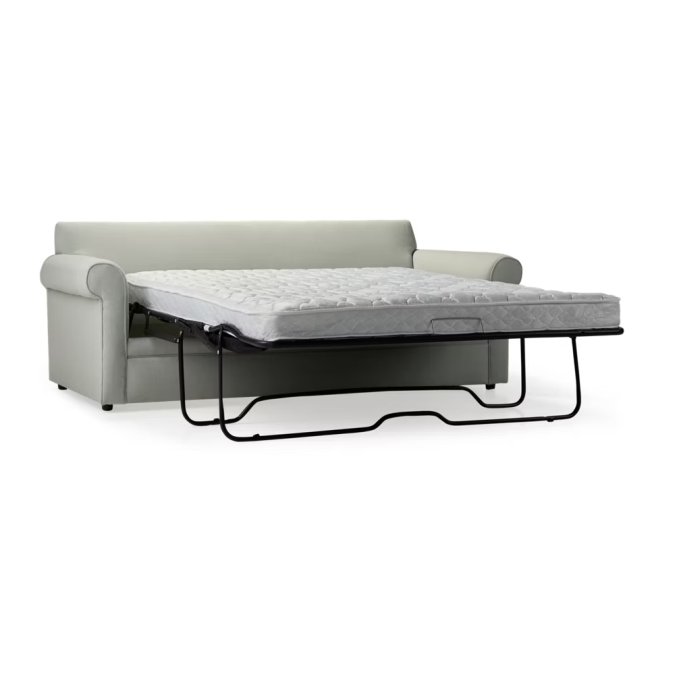
Bi-fold mechanisms fold the mattress in half and tuck it into the sofa cavity. They are the most common residential design and the simplest to operate, which is why they are the most frequently misapplied in hospitality. A bi-fold typically accepts a 4.5 to 6 inch mattress, and because it folds once, stress concentrates at a single hinge line. In low-turnover settings that is fine; in a room converted nightly, that fold line is where foam breaks down first.
Tri-fold mechanisms fold the mattress into three sections, spreading stress across two hinge lines and allowing a thicker mattress and flatter sleeping surface. The trade-off is cavity depth: a tri-fold needs more vertical space inside the frame, affecting seat height and back cushion proportions. Tri-folds are common in hospitality settings where guest comfort is the priority and the frame can be engineered around the deeper cavity.
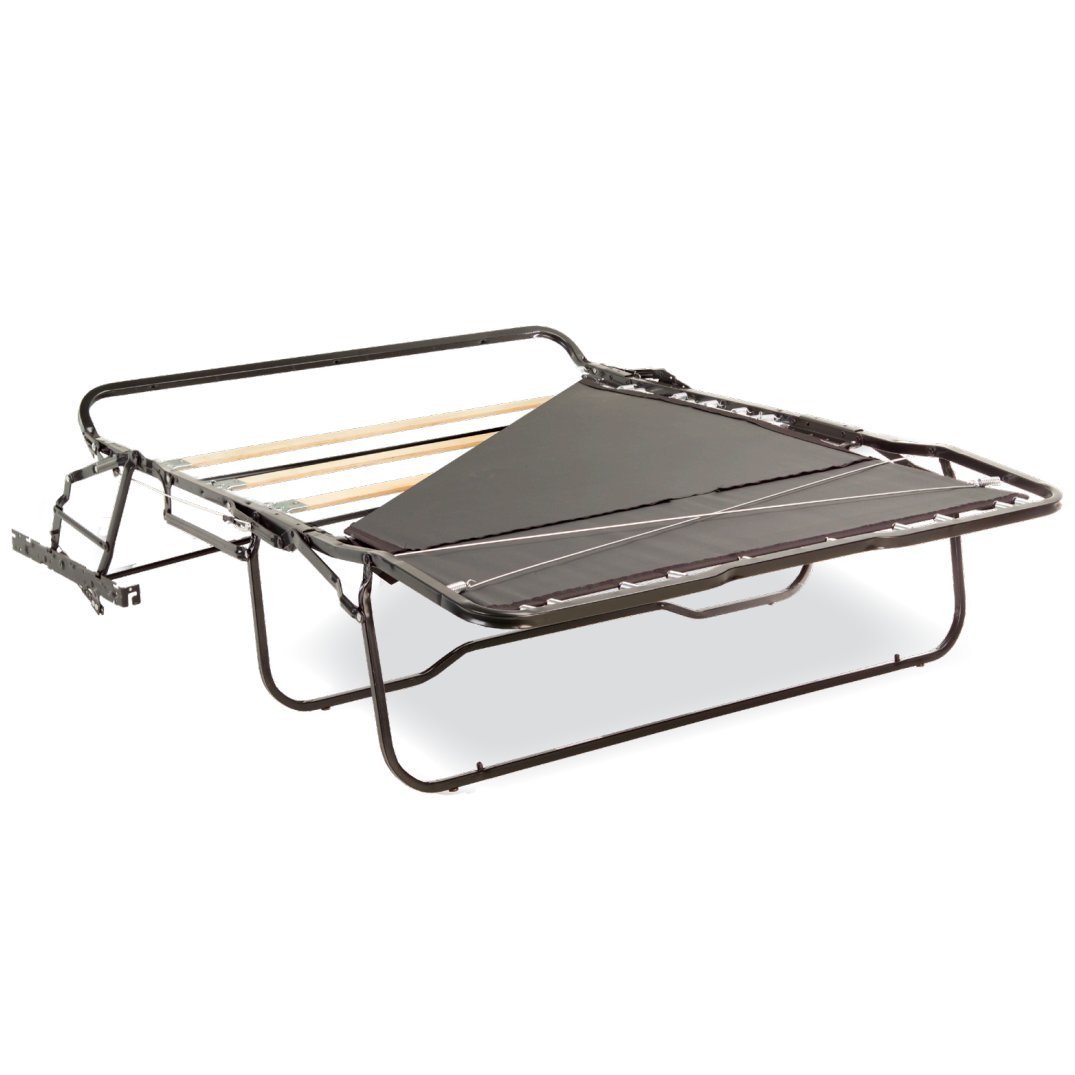
No-bar platform systems eliminate the horizontal support bar guests feel through the mattress, the single most common source of guest complaints, and the design most requested by procurement teams replacing older pull-out sofa beds. A platform system supports the mattress across its full surface rather than at a few contact points.
| Mechanism Type | Fold Pattern | Mattress Thickness | Cavity Depth Needed | Conversion Effort | Typical Failure Point |
|---|---|---|---|---|---|
| Bi-fold | Two sections | 4.5-6 in | Shallow | Lowest | Single fold-line foam breakdown |
| Tri-fold | Three sections | 5-6 in | Deep | Moderate | Hinge alignment drift |
| No-bar platform | Flat platform | 5-6 in | Deep | Moderate | Glide system wear |
No-Bar and No-Spring Technology Explained
No-bar technology removes the steel bar that traditionally runs across the middle of a sleeper mattress, the fastest way to change how a bed feels to sleep on.
No-spring designs replace coil systems with a solid platform, distributing weight evenly and eliminating the sagging that develops after repeated use. For a memory foam mattress, a solid platform is essential; coils underneath foam create pressure points and shorten mattress life. The platform also spreads weight across the frame rather than concentrating it at spring contact points, reducing the localized stress that cracks welds over time.
The trade-off is weight. A no-bar platform mechanism typically weighs more than a spring-based equivalent, which matters if housekeeping moves furniture regularly or you are specifying for an upper floor with a floor-load limit. Heavier is better only when the frame and floor can carry it.
How Conversion Effort and Cycle Count Should Drive Your Choice
Conversion effort is the variable buyers underestimate most. A mechanism requiring a firm two-handed pull is fine in a guest room used a few times a month, but becomes a maintenance liability in an extended-stay property where the bed opens and closes daily.
Cycle count is the number to ask a supplier for. A mechanism rated for occasional residential use and one rated for daily conversion may look identical on a spec sheet, but the locking assembly, glide system, and weld schedule are built to different tolerances. Ask how many open-and-close cycles it is designed to withstand and how that rating was established. A supplier who cannot answer is selling you a frame, not a duty rating.
A common pattern in refurbishment work: a property replaces mattresses on a five-year cycle but keeps the original mechanisms, then wonders why guest complaints persist. The mattress was never the limiting factor. The mechanism was.
Commercial Grade Sofa Bed Frames: What Sets Them Apart
Commercial grade sofa bed frames are built to a different durability standard than residential furniture, and the difference shows up in steel gauge, weld quality, and the locking mechanism that holds the bed open. These robust mechanical components remain essential for the longevity of luxury hotel furniture that must withstand the constant cycles of guest turnover.
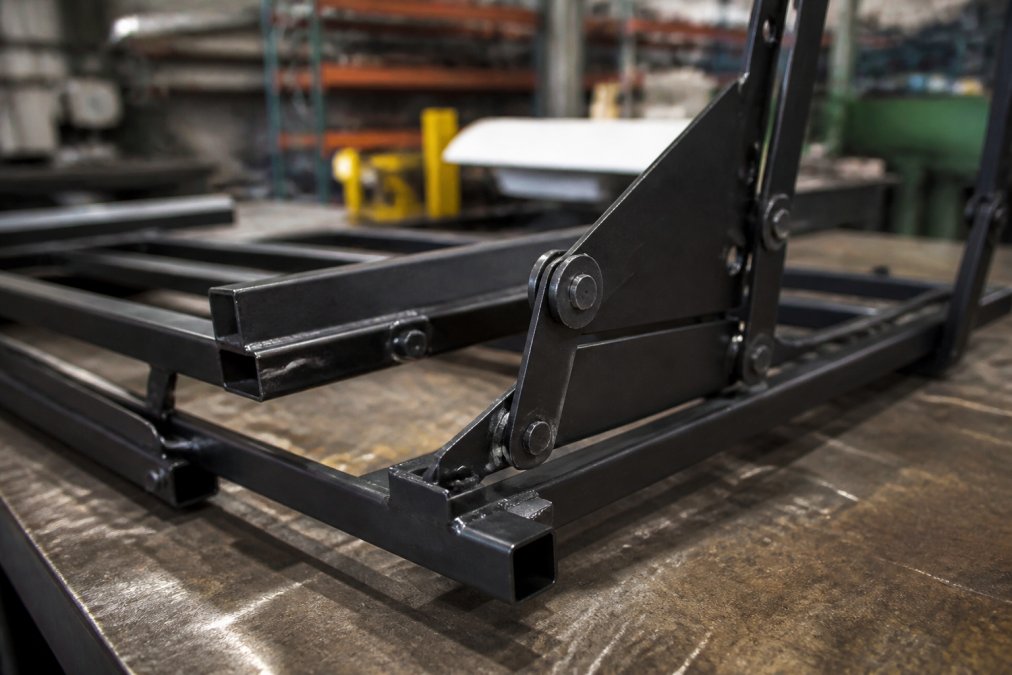
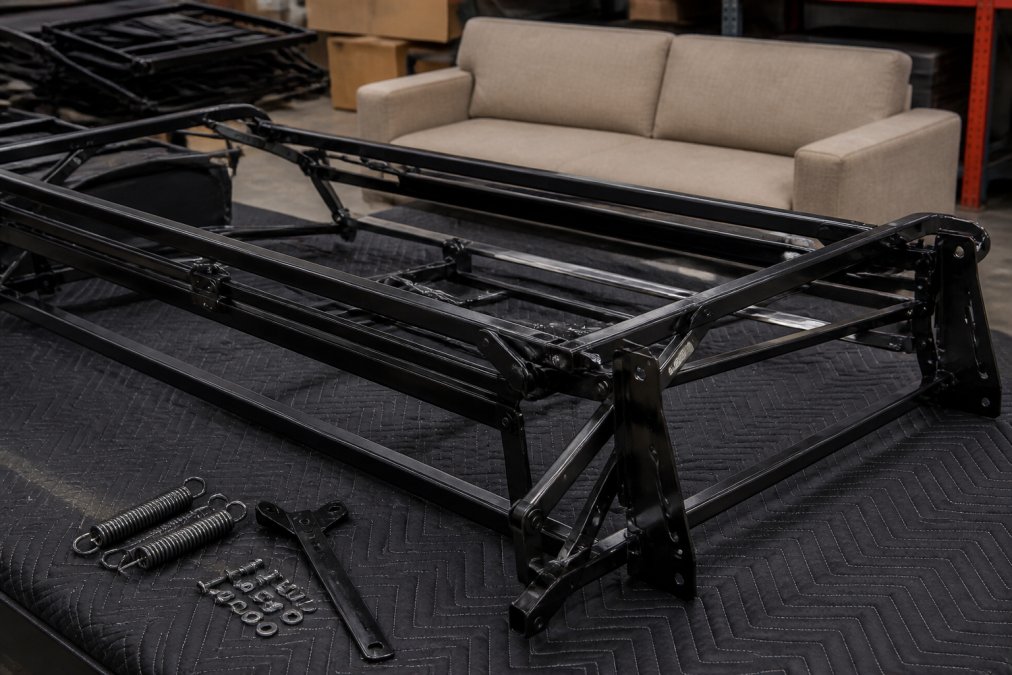
Hospitality Sleeper builds mechanisms from square tube steel rather than the thinner round tubing common in residential frames. Square tube resists twisting under load, the cause of most mechanical failures in high-turnover properties.
A common mistake is specifying a residential-grade frame for a room with nightly conversions. Contract grade is rated for the load-bearing capacity and cycle count hospitality use demands.
Durability, Load Capacity, and Mattress Compatibility
Load-bearing capacity should be the first number you check. A mechanism rated for occasional residential use will not hold up to daily conversion in an extended-stay property.
Mattress thickness matters just as much. Most sleeper mechanisms accept a mattress between 4.5 and 6 inches thick (astm.org). Go thicker and the sofa won't close properly; go thinner and guests feel the frame through the mattress.
Upholstery compatibility is the third variable. Heavier fabrics and high-density foam add weight that the mechanism has to carry every time it opens and closes.
Sourcing Custom Sized Sleeper Sofa Mechanisms From a Domestic Supplier
Custom sized sleeper sofa mechanisms let designers and manufacturers fit non-standard sofa dimensions without compromising the mechanism's geometry. A domestic supplier can produce these to specification, difficult to coordinate with overseas factories on a renovation timeline.
When you evaluate a custom sized sleeper sofa mechanism supplier, ask three questions:
- Can they produce to your exact dimensions, or do they only stock standard sizes?
- What is the lead time on a custom run, and does it fit your renovation schedule?
- Who handles the consultation if the replacement mechanism doesn't match the original?
That last question matters more than most procurement teams expect. Identifying the correct replacement mechanism for an existing sofa bed requires matching frame geometry, mounting points, and mattress depth. Hospitality Sleeper's consultation process simplifies that step and reduces the risk of ordering the wrong part.
For furniture manufacturers integrating mechanisms into contract sofa lines, you need a partner who can supply at volume, on schedule, and to consistent tolerances across production runs. Hospitality Sleeper works directly with manufacturers as well as with properties sourcing replacements themselves.
Volume capacity is a legitimate concern for portfolio managers. A 200-unit renovation needs a supplier who can deliver on schedule without partial shipments that stall installation crews.
Sleeper Sofa Mechanism Maintenance Tips for Long-Term Performance
Most sites that sell sleeper sofa mechanisms stop at the sale, but maintenance is where the money is saved: a mechanism that gets a fifteen-minute service once or twice a year routinely outlasts one that never does. The habits below are the ones that matter.
Lubricate the glide system on a schedule, not on a symptom. Twice a year is the baseline for a room converted nightly; once a year is adequate for occasional-use guest rooms. Use a dry silicone lubricant, and avoid oil-based products and general-purpose grease, which attract dust and lint and eventually gum up the hinge points and glide tracks they were meant to protect (nps.gov). Apply to the glide tracks and pivot points, then cycle the mechanism open and closed two or three times to distribute the lubricant.
Inspect welds, mounting bolts, and the locking assembly during your annual furniture audit. A loose mounting bolt is a five-minute fix with a wrench; a cracked weld is a mechanism replacement. Skipping the inspection is what turns a bolt into a weld. Pay particular attention to the locking assembly, the part guests interact with most directly and the one most likely to be forced.
Train housekeeping on correct operation, and give them a stop rule. Most mechanical failures start with someone forcing a binding mechanism. The instruction should be simple: if it does not move smoothly, stop and report it rather than pushing harder. A reported binding mechanism becomes a lubrication job; the same mechanism forced closed becomes a cracked weld and a replacement.
Watch for the seasonal trigger. Humidity swings and heating-season dryness both affect how a mechanism moves. Many properties find mechanisms that operated smoothly in spring begin to bind in mid-winter, when indoor air is driest and lubricant films thin out. Scheduling one lubrication pass at the start of heating season and one at the start of cooling season keeps the mechanism ahead of the change.
A Simple Maintenance Cadence You Can Hand to a Team
| Interval | Task | Who |
|---|---|---|
| Monthly | Visual check of locking assembly and glide tracks during room cleaning | Housekeeping |
| Twice yearly | Lubricate glide system with dry silicone; cycle mechanism to distribute | Maintenance |
| Annually | Inspect welds, mounting bolts, and locking assembly; tighten as needed | Maintenance |
| On report | Investigate any binding, slipping, or incomplete closure before returning room to service | Maintenance |
The cadence matters more than the individual tasks. A property that lubricates once and never inspects gets less value than one that inspects monthly and lubricates on schedule, because the monthly visual check catches the binding mechanism before it becomes a forced mechanism.
Why Maintenance Beats Replacement Economics
The argument for maintenance is not sentimental. A mechanism lubricated and inspected on schedule avoids the two failure modes that drive replacement: weld cracking from binding stress and locking assembly wear from forced operation. Both are preventable, and both are expensive to discover mid-season when a room cannot be sold.
For portfolio managers, fold mechanism maintenance into the existing furniture audit rather than creating a separate program. The audit already touches every room; adding a two-minute mechanism check costs almost nothing and produces a running record of which rooms are trending toward service, letting you plan replacements on your schedule instead of the mechanism's.
Troubleshooting Common Mechanical Failures Before They Worsen
Most mechanical failures announce themselves before they become replacements. The frame binds, the locking mechanism slips, or the bed won't sit flat. Each symptom points to a specific cause.
| Symptom | Likely Cause | Fix |
|---|---|---|
| Bed won't lock open | Worn locking mechanism | Replace locking assembly |
| Frame binds mid-fold | Dry or dirty glide system | Clean and lubricate |
| Mattress sags in center | Failed mattress support system | Inspect platform or springs |
| Sofa won't close fully | Mattress too thick | Verify thickness spec |
The mistake properties make is waiting. A binding glide system that gets lubricated costs nothing. The same mechanism ignored for a year becomes a frame replacement because the binding stress cracks a weld.
Upholstery trade professionals refurbishing hospitality furniture see this constantly: a sofa that needed a service call needs a new mechanism because nobody addressed the early symptom.
If you're sourcing replacement mechanisms for a refurbishment, confirm the load-bearing capacity and mounting pattern match the original before ordering. Hospitality Sleeper's consultation service handles that verification, and the Lifetime Service Policy covers the mechanism for as long as you own it.
Conclusion
Sourcing sleeper sofa mechanisms for a hospitality portfolio means balancing durability, guest comfort, and maintenance cost across every unit you operate. Hospitality Sleeper builds American-made mechanisms from square tube steel, backs them with over 35 years of experience, and supports them with an exclusive Lifetime Service Policy and expert consultation on replacement parts. Get started with Hospitality Sleeper and specify mechanisms that hold up to nightly conversion.
Frequently Asked Questions
Are there any sleeper sofa mechanisms made in the USA?
Yes. A number of American manufacturers produce sleeper sofa mechanisms domestically, with production concentrated in furniture-making regions like North Carolina. These mechanisms typically use square-tube steel frames and are built to contract-grade standards for hotels, resorts, and vacation rentals. Domestic production also means replacement parts and service support are easier to source when something wears out, which matters for properties managing dozens or hundreds of units.
What are the benefits of square-tube frame sleeper mechanisms?
Square-tube frames distribute weight more evenly than round-tube or stamped-steel alternatives, which reduces flex and fatigue at the joints. That translates to fewer mechanical failures over a property's renovation cycle. They also tend to hold their shape better under repeated daily conversions, which is the norm in hospitality settings. For procurement teams, the practical result is fewer mid-cycle repairs and more predictable replacement schedules.
How do I choose a durable sleeper sofa mechanism for hospitality use?
Start by confirming the mechanism is rated for commercial or contract use, not residential. Check the frame material and weld quality, ask about load-bearing capacity, and verify the mechanism works with your specified mattress thickness. For custom-sized units, work with a domestic supplier who can match non-standard dimensions. Finally, ask what service and parts support is included, since long-term repairability matters more than the initial purchase in a hotel environment.
Can custom sized sleeper sofa mechanisms be sourced domestically?
Yes. Several American manufacturers build mechanisms to non-standard dimensions for hospitality FF&E projects, including custom sofa depths and widths. The process usually starts with your furniture manufacturer or designer submitting exact specifications. Lead times vary by complexity and order volume, so build the customization window into your renovation schedule early. Working with a domestic supplier also simplifies communication and reduces shipping delays compared to overseas sourcing.