 ultimate-guide
Why Hotel Sleeper Mechanisms Fail Early
Table of Contents
- The Mechanical Reasons Sleeper Sofa Mechanisms Fail in Hotels
- Sleeper Sofa Mechanism Installation Guide: Getting the Setup Right
- Hotel Furniture Maintenance Best Practices That Prevent Early Failure
- Frequently Asked Questions
Last Updated: September 20, 2026
The Mechanical Reasons Sleeper Sofa Mechanisms Fail in Hotels
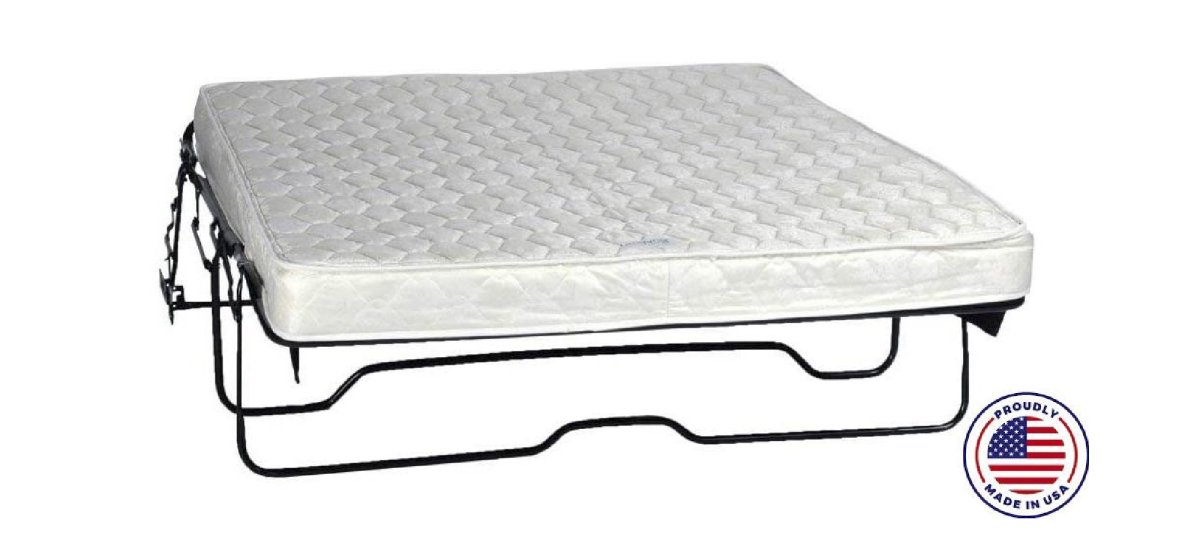
Hotel sleeper mechanisms fail early because the hardware was never engineered for a commercial duty cycle, a home-rated mechanism may see more open-close cycles in one hotel year than in a decade in a spare bedroom. At Hospitality Sleeper, we've spent over 35 years building American-made mechanisms for hotels, resorts, and vacation rentals. Most failures blamed on "cheap hardware" are really specification failures: a mechanism correctly rated, installed square, and maintained on a schedule outlasts a heavier one mismatched to its frame.
Metal Fatigue and Spring Fatigue: The Slow Killers
Metal fatigue, progressive weakening under repeated stress cycles, is the most common cause of early mechanism failure, as pivot points, tension springs, and frame rails absorb force every time a guest opens the bed. Tension springs lose their pull over time, so the mattress deck no longer sits flat and the bed sags.
Misalignment and Frame Integrity
A mechanism that isn't square in the frame will bind, accelerating wear at every pivot point and locking mechanism on that side. A square-tube frame resists racking forces far better than a lighter channel frame, which is why we build ours from square tube.
The Failure Points to Watch
The components that fail first, in rough order of frequency:
- Tension springs, lose tension gradually, causing sag before outright failure
- Pivot points, wear fastest when the mechanism is misaligned
- Locking mechanism, the part guests interact with most, and the first to jam
- Mattress deck, bends under repeated point loading
- Frame rails, crack at weld points after prolonged racking
Sleeper Sofa Mechanism Installation Guide: Getting the Setup Right
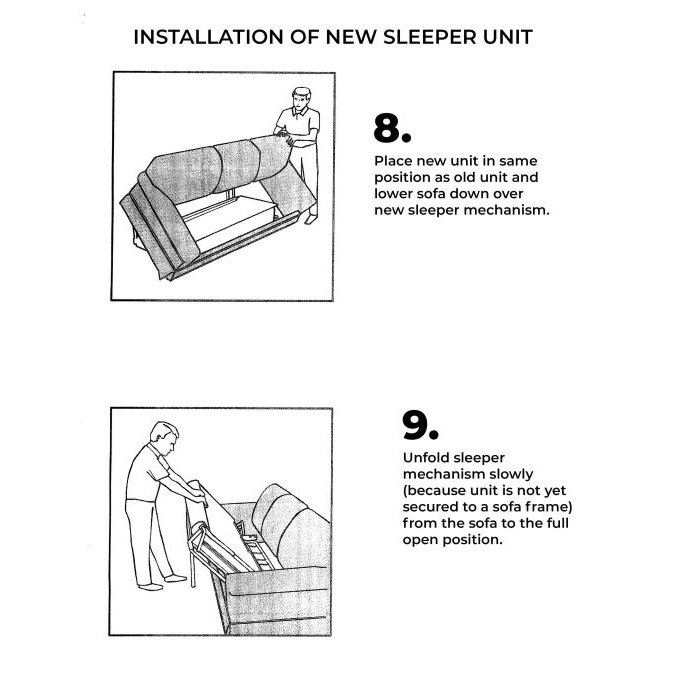
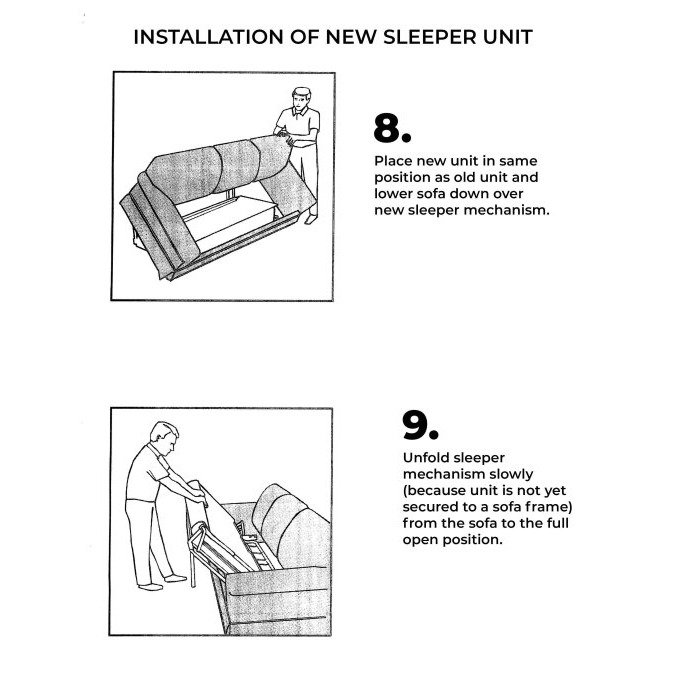
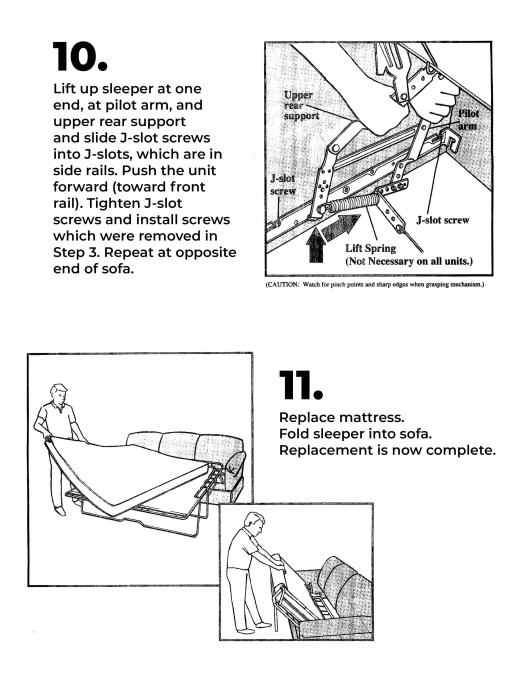
The sleeper sofa mechanism installation guide most properties need is short: measure the frame opening, confirm the mechanism matches the required load-bearing capacity, and mount it square. A correctly installed mechanism distributes load evenly across all four mounting points; an incorrectly installed one concentrates stress on two.
Hotel Furniture Maintenance Best Practices That Prevent Early Failure
Hotel furniture maintenance best practices come down to one principle: catch degradation before it becomes structural failure. A practical routine for sleeper mechanisms:
- Inspect tension springs for loss of tension every quarter
- Lubricate pivot points per the manufacturer's specification
- Cycle every sleeper sofa at least monthly, even in low-occupancy rooms
- Check the locking mechanism for smooth engagement
- Inspect the mattress deck for bending or cracking
- Verify all mounting fasteners remain tight
- Log every inspection to spot a unit trending toward failure
Troubleshooting Stuck Sofa Bed Frames
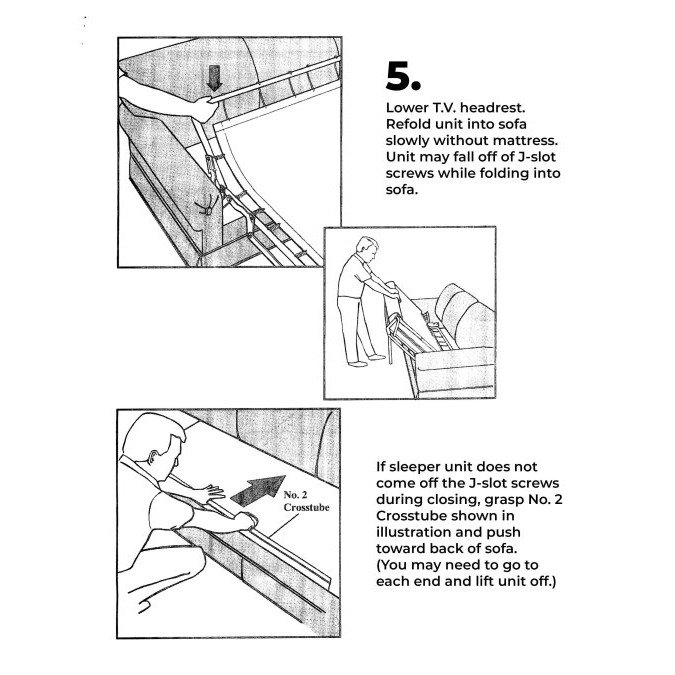
Troubleshooting stuck sofa bed frames starts with identifying whether the mechanism is jammed or simply misaligned. If the frame won't open at all, check the locking mechanism first; if it opens partway and stops, you're likely looking at misalignment or a bent frame rail. Never force a stuck frame open, forcing it bends pivot points and turns a small repair into a full mechanism replacement.
Repair or Replace: The Decision
Repair makes sense when the failure is isolated: a single worn spring, a loose fastener, a stiff lock. Replace when you see structural failure, cracked frame rails, multiple bent pivot points, or a permanently deformed mattress deck. A mechanism with widespread spring fatigue but no visible structural damage will usually cost more to rebuild than to replace.
Why Cycle Testing and Procurement Standards Matter
Cycle testing reveals what a mechanism will actually do before you buy hundreds of them. Procurement standards requiring documented cycle testing separate contract-furniture hardware from residential showroom hardware. When sourcing for a renovation cycle, ask for the test protocol, not just the warranty.
The Lifecycle Cost Angle Most Buyers Miss
Lifecycle cost analysis changes the math on sleeper mechanisms entirely: the larger costs are labor to replace, guest satisfaction impact when a bed fails during a stay, and the downtime of taking a room out of inventory. A mechanism that costs more up front but lasts through two renovation cycles can be the cheaper choice, why we built our business around square-tube frames and a Lifetime Service Policy.
Frequently Asked Questions
What is the average lifespan of a sleeper couch in a high-traffic hotel environment?
In high-traffic hospitality settings, sleeper sofa mechanisms often fail within three to five years, compared to seven to ten years in residential use. The difference comes down to cycle count: a hotel room may see the mechanism opened and closed hundreds of times per year, accelerating spring fatigue, pivot point wear, and frame stress. Commercial-grade mechanisms with heavy-duty hardware and square-tube frames typically last longer under the same conditions.
How does improper guest usage contribute to mechanism failure?
Guests unfamiliar with sofa bed operation often force frames open or closed, yank on mattress decks, or sit on partially deployed mechanisms. This puts stress on locking mechanisms, pivot points, and tension springs beyond their design limits. A single incident of forcing a stuck frame can bend structural components or strip hardware. Clear operation labels and staff training on proper sofa bed operation reduce guest-impact issues significantly.
What are the most common signs that a sleeper sofa mechanism is failing?
Watch for difficulty opening or closing the frame, unusual squeaking or grinding sounds, visible misalignment of the mattress deck, sagging in the middle of the sleeping surface, and the frame not locking securely in the open position. These signs point to spring fatigue, worn pivot points, or frame integrity loss. Catching them early allows targeted repair rather than full mechanism replacement.